

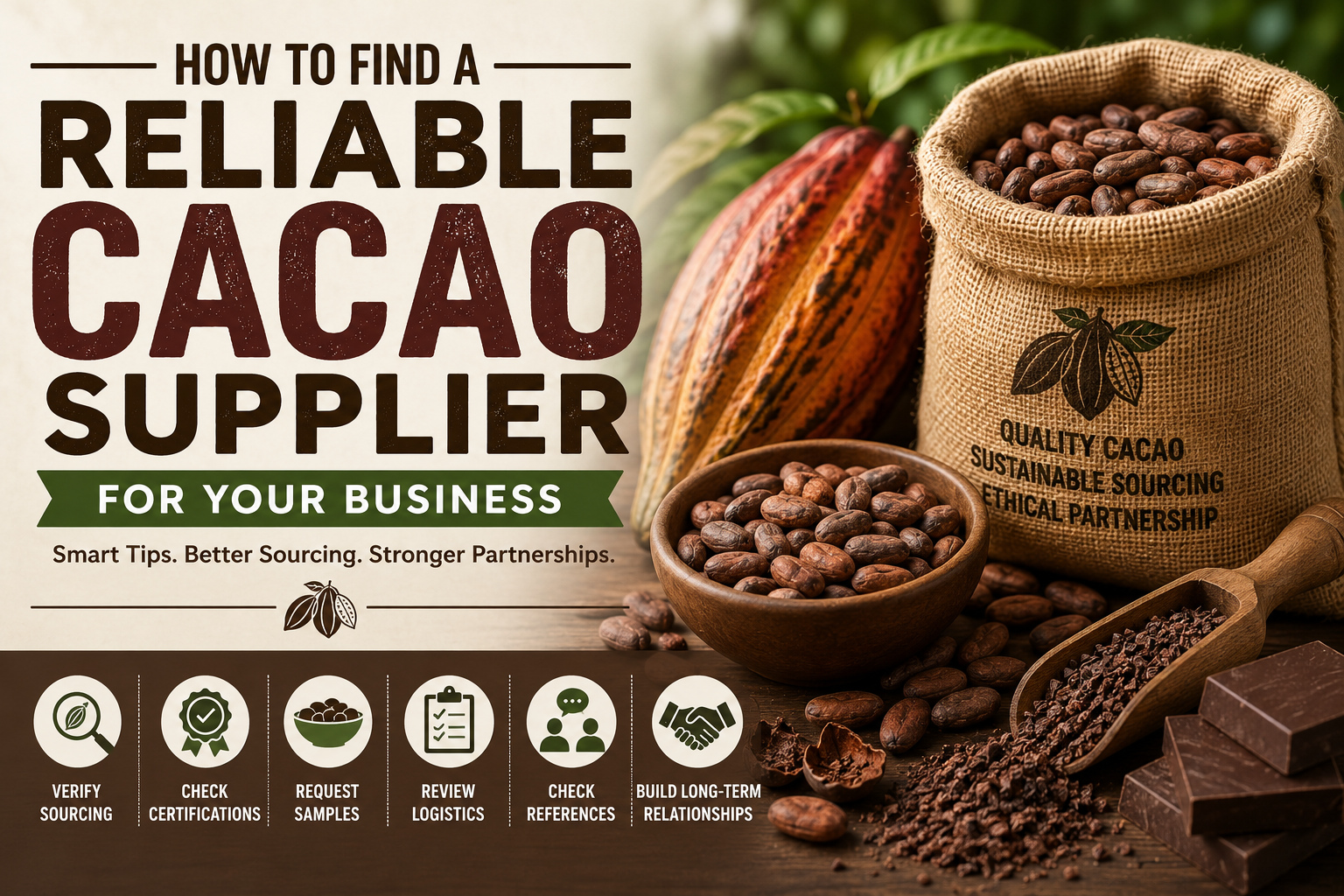
Finding a reliable cacao supplier is one of the most important decisions for chocolate makers, confectionery brands, food manufacturers, and businesses that depend on a consistent cacao supply. The wrong supplier can lead to inconsistent quality, delayed shipments, customs problems, unexpected costs, and production disruptions.
It can be tempting to compare a few quotes and choose the cheapest option. However, cacao is an agricultural product affected by harvest conditions, weather, processing, transportation, and international supply chains. A dependable cacao supplier should offer more than competitive pricing—they should provide consistent quality, transparent sourcing, proper documentation, reliable logistics, and responsive customer service.
Here are the key factors to consider when choosing a reliable cacao supplier for your business.
Define Your Cacao Requirements Before Choosing a Supplier
Before contacting cacao suppliers, clearly define what your business needs. Without a specific product specification, it can be difficult to compare suppliers accurately.
- Whole cacao beans, cacao nibs, cacao liquor, or cacao powder
- Preferred country or region of origin
- Organic or conventional cacao
- Required certifications
- Monthly or annual purchase volume
- Packaging requirements
- Expected delivery schedule
- Acceptable pricing and volume flexibility
For example, a small chocolate brand may need smaller and more flexible orders, while a large food manufacturer may require consistent commercial volumes throughout the year. Defining these requirements early helps you identify suppliers that can actually support your business.
Ask Where the Cacao Beans Come From
Origin and traceability are important factors when evaluating a cacao supplier. A reputable supplier should be able to explain where its cacao comes from and provide meaningful information about the supply chain.
Questions to Ask About Cacao Origin
- Which country does the cacao come from?
- Which region or growing area is involved?
- Is the cacao sourced from a cooperative, estate, or individual farms?
- How many intermediaries are involved?
- How is the cacao transported and stored?
- Can the supplier provide traceability documentation?
Specific answers can indicate that a supplier has a well-established sourcing network. Vague descriptions such as simply stating “West Africa” or “South America” may not provide enough information for businesses that require detailed traceability.
Verify Cacao Certifications and Documentation
If certifications are important to your business, do not rely solely on logos displayed on a supplier’s website or marketing materials. Ask for current documentation and verify that the certification applies to the specific supplier, product, and relevant supply chain.
Common Cacao Certifications
- Organic certification
- Fair Trade certification
- Rainforest Alliance certification
- Other sustainability or responsible-sourcing certifications
Check the certificate number, issuing organization, scope, and expiration date where applicable. Keeping accurate certification records can also help your business meet customer, retailer, and regulatory requirements.
Request Samples Before Placing a Large Cacao Order
Sampling is one of the most effective ways to evaluate a potential cacao supplier. Never judge a supplier only by photographs, product descriptions, or a sales presentation.
Request a representative sample and evaluate it using your actual production process. Depending on your business, this may involve roasting, grinding, fermentation evaluation, flavor testing, or incorporating the cacao into your finished products.
Evaluate More Than Flavor
- Bean size and appearance
- Moisture level
- Fermentation quality
- Defects and foreign material
- Flavor and aroma
- Roasting performance
- Consistency between samples
It is also useful to ask how the supplier manages natural variation between harvests. A professional supplier should be able to explain its quality-control procedures and how it works to maintain consistency across larger shipments.
Ask Important Shipping and Logistics Questions
A cacao supplier can offer excellent products but still be a poor business partner if its logistics are unreliable. Before placing an order, understand how the supplier handles international shipping and unexpected delays.
Questions to Ask About Logistics
- What is the typical lead time?
- What is the minimum order quantity?
- Which shipping methods are available?
- Which Incoterms are offered?
- How is cacao packaged for international transportation?
- What happens if a shipment is delayed?
- How are damaged or rejected shipments handled?
- Can the supplier support larger volumes as your business grows?
International cacao supply can be affected by weather, harvest conditions, transportation issues, port congestion, and changes in global demand. A reliable supplier should have contingency plans and communicate quickly when problems arise.
Check the Supplier’s Existing Customer References
Testimonials published on a supplier’s website can be useful, but independent customer references can provide a more realistic picture of the supplier’s performance.
Ask the supplier for references from businesses that have similar purchasing requirements. If possible, speak directly with those customers.
Questions to Ask Existing Customers
- Are shipments delivered on time?
- Is cacao quality consistent?
- Are invoices and documentation accurate?
- Does the supplier communicate effectively?
- Have there been unexpected price increases?
- How does the supplier handle quality problems?
- Would you continue purchasing from this supplier?
You can also research industry associations, trade groups, professional communities, and relevant business networks to identify feedback about potential suppliers.
Do Not Choose a Cacao Supplier Based Only on Price
Price is an important factor when sourcing cacao, but it should not be the only consideration. The cheapest quotation may become expensive if it results in inconsistent quality, delayed shipments, additional inspections, or production problems.
- Product quality
- Consistency
- Traceability
- Certifications
- Documentation
- Shipping reliability
- Customer service
- Minimum order quantities
- Total landed cost
Paying slightly more for a dependable supplier can potentially save money over time by reducing defective shipments, production interruptions, missed deadlines, and emergency sourcing costs.
Build a Long-Term Relationship With Your Cacao Supplier
Finding a reliable cacao supplier should not be treated as a one-time purchasing decision. A strong supplier relationship can become an important part of your long-term supply chain strategy.
Once you find a supplier that consistently meets your requirements, communicate your expected purchasing volumes and future plans. Providing forecasts can help the supplier prepare inventory and plan shipments more effectively.
If you encounter a quality issue, address it promptly and provide clear information about the problem. Professional communication on both sides can help resolve issues and improve future shipments.
What Makes a Reliable Cacao Supplier?
- Transparent sourcing information
- Consistent cacao quality
- Proper certifications and documentation
- Reliable shipping and lead times
- Clear communication
- Responsive problem resolution
- Competitive and transparent pricing
- Ability to support your business as it grows
Final Thoughts on Choosing a Reliable Cacao Supplier
Finding the right cacao supplier for your business takes more effort than simply comparing three price quotes. Product quality, sourcing transparency, certifications, samples, logistics, customer references, and long-term reliability should all be part of your evaluation.
Start by clearly defining your cacao requirements, then shortlist suppliers that can meet your specifications. Request samples, verify documentation, ask detailed logistics questions, and speak with existing customers before committing to a significant order.
The right supplier can become more than just a vendor. A dependable cacao sourcing partner can help your business maintain consistent product quality, manage supply-chain risks, and build a stronger foundation for long-term growth.
Looking for a Reliable Cacao Supplier?
If your business is looking for quality cacao products and a dependable supply partner, evaluate suppliers carefully based on quality, sourcing, documentation, logistics, and long-term reliability before placing your order.