

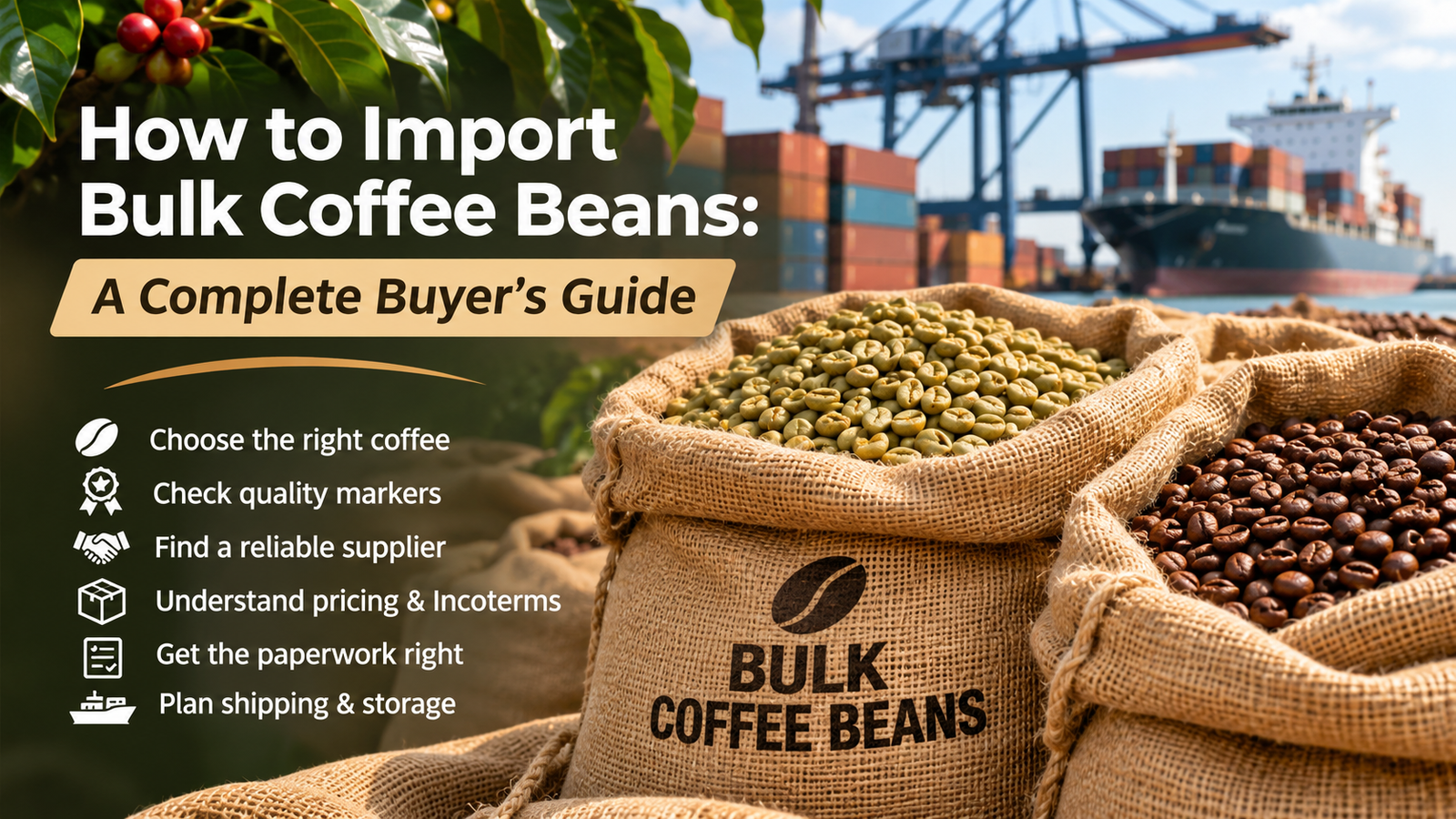
If you have ever tried to source bulk coffee beans from overseas, you know it takes more than placing an order and waiting for a container. Origin, grade, paperwork, freight and customs can all go wrong if you are new to importing. The good news is that the process becomes much easier once you understand what to look for and how to prepare.
Whether you operate a coffee roasting business, café, distribution company or private-label brand, importing coffee directly can offer better pricing and greater control over product quality. However, making the right decisions at every stage is essential.
This guide explains how to import bulk coffee beans from start to finish, covering supplier selection, quality assessment, pricing, documentation, shipping and storage.
Why Businesses Import Bulk Coffee Beans
Roasters, cafés, distributors and private-label brands generally import coffee for two main reasons: cost savings and greater control over sourcing.
Buying bulk coffee beans directly from an exporter can eliminate several intermediaries, helping businesses reduce their purchasing costs. Direct sourcing also gives buyers more flexibility when selecting coffee origin, grade, processing method and bean variety.
Consistency is another important advantage. Working with a dependable exporter helps businesses maintain a reliable supply and achieve consistent flavour profiles throughout the year.
Step 1: Choose the Right Type of Coffee
Before contacting exporters, decide which type of coffee best suits your business requirements. Arabica and Robusta are the two most commonly traded coffee varieties.
Arabica Coffee
Arabica is generally known for its smoother taste, sweetness and aromatic characteristics. It is widely used in specialty coffee, premium roasting and high-quality café blends. Its production costs are typically higher than Robusta.
Robusta Coffee
Robusta has a stronger, bolder and more bitter flavour, with higher caffeine content. It is commonly used in espresso blends, instant coffee and commercial coffee products.
Green Coffee vs Roasted Coffee
You should also decide whether to import green or roasted coffee beans. Most international coffee importers prefer green beans because they have a longer storage life under suitable conditions and allow greater control over roasting.
Roasted coffee, on the other hand, is ready for retail or commercial use but requires careful packaging to preserve its freshness and aroma.
Step 2: Learn the Important Coffee Quality Markers
Understanding coffee quality specifications helps you compare exporters and avoid receiving products that do not meet your expectations. You do not need to be a certified Q Grader, but knowing the following terms is useful.
- Screen Size: Indicates the physical size of coffee beans. Uniform beans generally support more consistent roasting.
- Defect Count: Measures imperfections such as broken, black or insect-damaged beans. Lower defect levels generally indicate better sorting and quality.
- Moisture Content: Green coffee commonly has a moisture content of approximately 10–12%, although the acceptable range depends on the applicable standard and contract.
- Cup Score: Specialty coffee lots are commonly evaluated using a 100-point scoring system, with scores of 80 or above generally qualifying as specialty grade.
Always request written quality specifications before confirming an order. A professional supplier of bulk coffee beans should be able to provide relevant grading and quality information.
Step 3: Find a Reliable Coffee Bean Supplier
Choosing the right exporting country is an important part of international coffee sourcing. Brazil, Vietnam, Colombia, Ethiopia, India and Indonesia are among the major coffee-producing countries.
Each origin offers different flavour characteristics and commercial opportunities. Ethiopia is particularly recognised for its floral and fruity coffee profiles, while Vietnam is one of the leading producers of Robusta coffee.
Once you have shortlisted potential exporters, carry out proper supplier verification.
What to Check Before Selecting an Exporter
- Valid business registration and export credentials.
- Relevant certifications, such as Fairtrade or Rainforest Alliance, where required.
- Previous international export experience.
- References from existing buyers or business partners.
- Product specifications and quality control procedures.
- Clear payment terms and shipping arrangements.
Arrange a video meeting whenever possible to discuss your requirements directly. Be cautious of quotations that are significantly below prevailing market prices. Extremely low offers can sometimes indicate old crop, inconsistent grading or questionable product quality.
Step 4: Always Test Coffee Samples Before Ordering
Never place a large international order without checking the product first. Request pre-shipment samples from your shortlisted suppliers and, if possible, obtain a sample taken from the actual production lot.
Evaluate the coffee through roasting and cupping, or arrange independent laboratory testing if necessary.
Once the sample meets your expectations, approve it in writing. Your purchase agreement should clearly state that the delivered shipment must comply with the approved sample and agreed quality specifications.
Step 5: Understand Coffee Pricing and Incoterms
International coffee prices fluctuate according to global supply, demand, weather conditions, production levels and market movements. As a result, supplier quotations may only remain valid for a limited period.
Two common international trade terms you should understand are FOB and CIF.
FOB (Free on Board)
Under FOB terms, the seller delivers the goods on board the nominated vessel at the agreed port of shipment. The buyer generally arranges and pays for the main international freight and insurance.
CIF (Cost, Insurance and Freight)
Under CIF terms, the seller arranges and pays for the cost of goods, marine insurance and freight to the agreed destination port. The buyer remains responsible for import clearance and applicable destination charges.
New importers may find CIF easier for their first shipments because the exporter arranges the main transportation. However, FOB can provide greater flexibility when working with established freight forwarders.
Step 6: Prepare the Required Import Documents
Incorrect or missing documentation can result in customs delays, additional expenses and shipment complications. Prepare the required paperwork before the coffee leaves the exporting country.
Common Documents for Coffee Imports
- Commercial Invoice: Contains product details, quantities, prices and transaction information.
- Packing List: Specifies the number of packages, weights and packaging details.
- Bill of Lading: Provides details of the shipment and serves as a transport document.
- Certificate of Origin: Identifies the country where the coffee was produced.
- Phytosanitary Certificate: Confirms that applicable plant-health requirements have been met.
- Fumigation Certificate: Required where applicable under destination-country regulations.
- Quality or Laboratory Certificate: Provides supporting information about product quality and specifications.
Import requirements vary depending on the destination country. Some markets require additional registrations, import permits, food safety documentation and traceability information.
For example, businesses importing into the European Union may need to comply with applicable food safety and sustainability regulations. Coffee is generally classified under HS heading 0901, but the complete tariff code and applicable import duties should be confirmed with a qualified customs broker.
Step 7: Plan Packaging, Shipping and Coffee Storage
Proper packaging and transportation are essential for protecting coffee quality during international shipping. Green coffee is commonly transported in 60 kg jute bags, sometimes with additional protective liners to reduce moisture exposure.
A standard 20-foot shipping container may accommodate approximately 18–20 tonnes of green coffee, depending on packaging, loading arrangements and applicable weight restrictions.
Protect Coffee During Transportation
- Use suitable packaging with moisture protection.
- Ensure containers are clean, dry and free from contamination.
- Consider desiccant bags to help manage moisture and condensation.
- Check container ventilation and loading conditions.
- Arrange suitable cargo insurance.
Store Imported Coffee Correctly
After the shipment arrives, move the coffee into a clean, cool, dry and well-ventilated warehouse. Keep bags away from direct sunlight, damp floors and strong-smelling materials.
Coffee can absorb surrounding odours, so proper warehouse conditions are essential for preserving its natural aroma and quality.
Common Mistakes to Avoid When Importing Coffee
Even experienced buyers can encounter problems when sourcing coffee internationally. First-time importers should pay particular attention to these common mistakes:
- Skipping sample testing and written quality approval.
- Ignoring moisture content and defect specifications.
- Selecting the cheapest supplier without verifying credentials.
- Underestimating customs duties, port charges and storage expenses.
- Failing to understand international shipping terms.
- Placing a very large first order without testing the supplier.
Starting with a smaller trial shipment is a practical way to evaluate product quality, communication, shipping reliability and the supplier’s overall performance before increasing order volumes.
Final Thoughts
Importing bulk coffee beans requires careful planning, but the process becomes manageable when you approach each stage systematically. Start by selecting the right coffee variety, understand quality specifications, verify your supplier and always approve samples before confirming a large order.
Pay equal attention to pricing, international shipping, customs documentation and warehouse conditions. These factors can make a significant difference to your overall importing costs and long-term business profitability.
If you are planning to source bulk coffee beans for your café, roasting business, distribution company or private-label brand, begin with a manageable trial order and build a reliable supply relationship as your business grows.
Looking for a Reliable Coffee Trading Partner?
Planning to source bulk coffee beans for your business? Get in touch with Best Source Trading to discuss your coffee sourcing requirements and explore suitable trading opportunities.